
World Cancer Day: Taking a Proactive Approach to the Most Commonly Diagnosed Cancer

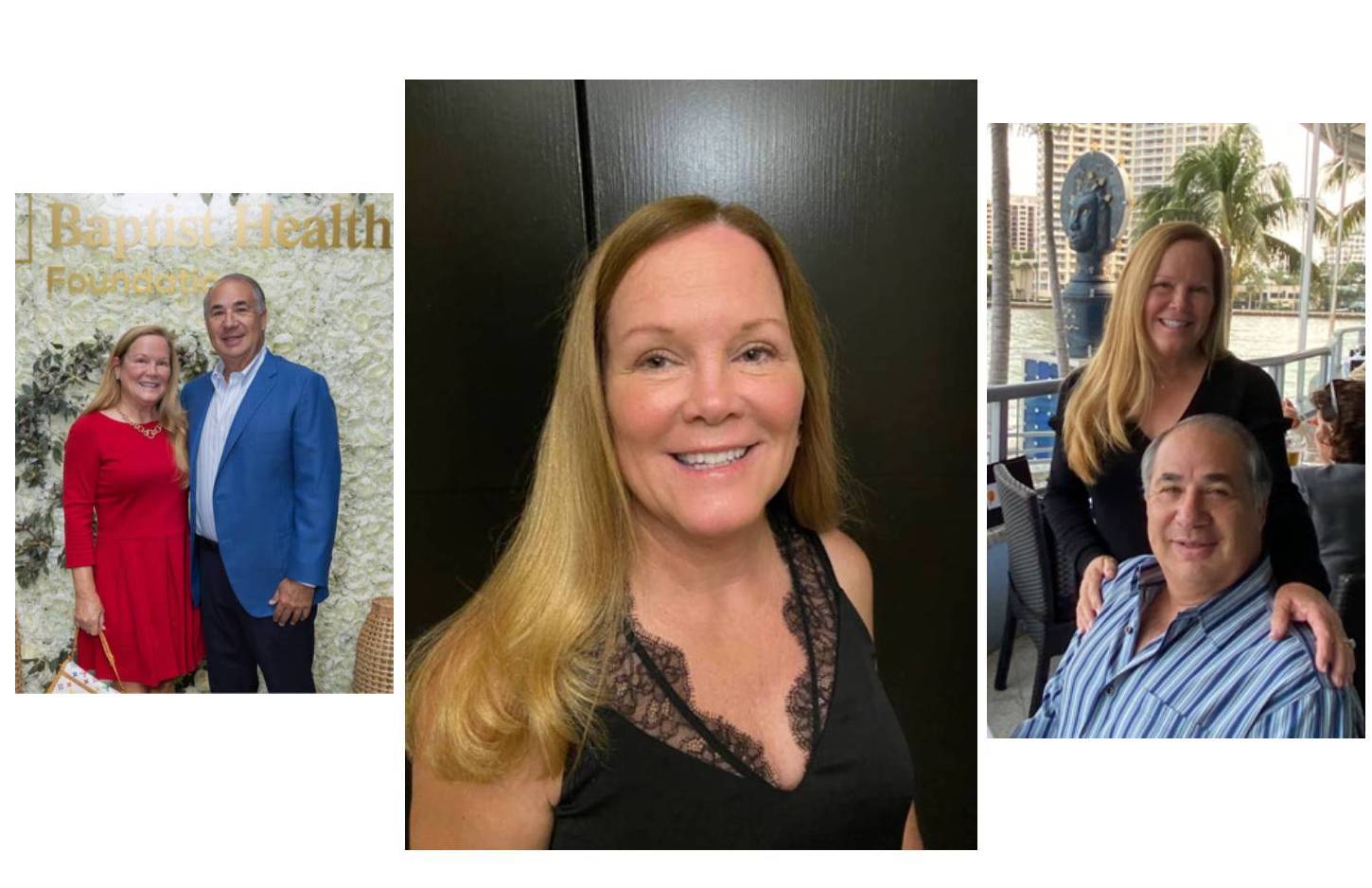
When Sue Perrin noticed an unusual spot on her right leg, she didn’t ignore it. As a retired registered nurse, she knew better. She showed the discolored area to her physician, who confirmed that her instincts were right. The growth was basal cell carcinoma, a type of skin cancer.
Although such lesions are often treated in a doctor’s office if they are superficial, Ms. Perrin elected for the expert care of Baptist Health Miami Cancer Institute, which she and her husband, Terry, have supported since its inception.
“We recommend Baptist Health to everyone,” says Ms. Perrin, who was a neonatal intensive care nurse at Baptist Hospital for more than 15 years.
On World Cancer Day, marked annually on February 4, it’s important to note that skin cancer is the most frequently diagnosed cancer. One in every five Americans will experience some form of skin cancer by age 70, experts say. Although most skin cancers are highly treatable — and curable — some can be complex, disfiguring and even deadly, as the world saw with singer Jimmy Buffett, who died from a rare and aggressive skin cancer called merkel cell carcinoma.
Be Vigilant About Checking Your Skin
Ms. Perrin notes the importance of seeking a physician’s advice if you notice any skin irregularities such as discolored areas, changes in a mole or a recurring skin lesion that won’t heal. Too many people ignore skin issues, thinking them unimportant when they might signal cancer.
“Early testing and detection will always result in a much better outcome than if the issue has time to grow and spread,” Ms. Perrin advises.
In her case, the diagnosis of basal cell carcinoma excluded more worrisome options. “This is a very minimal and treatable cancer diagnosis, so I was not as concerned as [I would have been] if I had received something requiring more complex treatment,” she says.
What is Basal Cell Carcinoma?
Basal cell carcinoma, the most common form of skin cancer, is the result of abnormal, uncontrolled growth of basal cells found in the epidermis, the outermost layer of skin. About 3.6 million cases are diagnosed each year in the United States.
Often attributed to sun exposure, basal cell carcinoma usually grows slowly and rarely spreads to other parts of the body. However, it can cause significant tissue damage. Untreated BCCs can become locally invasive, grow wide and deep into the skin and destroy skin, tissue and bone.
When skin cancer is found, doctors make treatment recommendations after considering the subtype — as in nodular, superficial, or infiltrative — and after evaluating its size, depth, location, and how deep it has grown.
Good Results With Expert Care
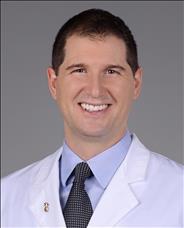
Ms. Perrin says her cancer was successfully removed in December by Michael Raisch, M.D., a Mohs micrographic surgeon and dermatologist at the Institute’s Multidisciplinary Skin Cancer Clinic.
Mohs surgery, considered the gold standard for most skin cancers, is often recommended when the cancer is large, aggressive or located in areas where it is critical to preserve as much normal tissue as possible, such as on the head, neck, hands, feet and genitals.
“The technique allows us to remove microscopic layers of skin and tissue that we can rapidly process to examine under a microscope,” Dr. Raisch explains. “We repeat the process during a single visit until no cancer cells remain. Because we can verify that all cancer cells are removed, we increase the chance of a cure, which is up to 99 percent with Mohs.”
The procedure was developed at the University of Wisconsin in the 1930s by general surgeon Dr. Frederic Mohs and has been refined over the years. While it can be done in a physician’s office, patients who comes to the Mohs Surgery Clinic at Miami Cancer Institute receive comprehensive care from a dedicated Mohs team, including dermatologists and oncologists, dermatologic surgeons, histotechnologists (specially trained lab personnel who prepare tissue for microscopic examination) and medical assistants.
Ms. Perrin says she had great confidence in Dr. Raisch and the rest of the team, whom she described as “amazing.” She has happily returned to her usual pursuits, which include boating, playing with her grandchildren, and enjoying life.
A Deep Connection
Ms. Perrin’s connection to Baptist Health runs deep. Her children were born at Baptist Hospital, and in addition to working in the hospital’s NICU, she volunteered there for many years after retiring.
When her mother-in-law was diagnosed with cancer and was treated at Miami Cancer Institute a few years ago, she and her husband Terry accompanied her to her appointments. Impressed with the care his mother received, her husband became a volunteer board member and the couple continues to support the Institute.
“Being a patient myself and supporting my mother-in-law in her treatment at Miami Cancer Institute reinforced our commitment to Baptist Health,” Ms. Perrin says. “The superior care and service — starting at the valet and extending all the way to check out — is seamless. I was always shown that my comfort and quality of care were the top priority.”
Miami Cancer Institute is renowned for its multidisciplinary approach to cancer care, state-of-the-art technology, personalized medicine and experienced surgical teams. The impact on the community is huge; the impact on individual patients and their families is even bigger, Terry Perrin says. “The level of care delivered here is genuinely exceptional,” he says. “It is one thing to hear strong metrics and positive reports during board meetings, but it is an entirely different experience to witness the level of care firsthand.”
To learn more about Baptist Health Cancer Care, click here.
