
From Clinical Trial to Clinic: Neurostimulation Improves Outcomes in Post-Stroke Swallowing Recovery

A novel neurostimulation therapy designed to support the recovery of swallowing function in patients following a stroke is now available for Baptist Health Brain and Spine Care patients at Marcus Neuroscience Institute at Boca Raton Regional Hospital and Baptist Health Miami Neuroscience Institute, following a pilot earlier this year.
Baptist Health Brain & Spine Care is the first in Florida to implement this type of targeted pharyngeal neurostimulation therapy for post-stroke dysphagia, which differs from traditional swallowing rehabilitation by directly stimulating the neural pathways that control swallowing rather than relying solely on exercise-based therapy.
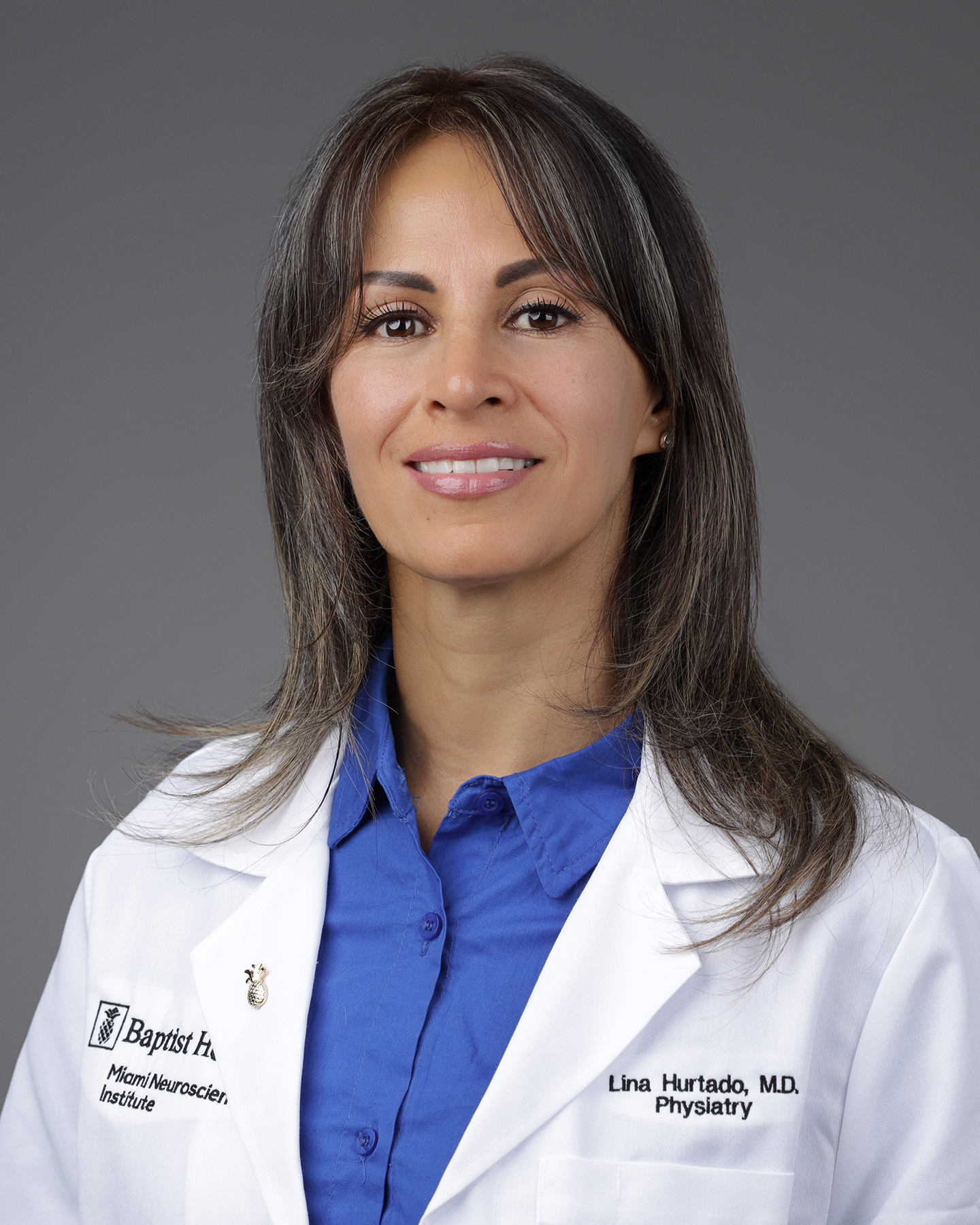
Lina Hurtado, M.D..
Experts with both institutes, which are part of Baptist Health Brain & Spine Care, say the treatment uses pharyngeal electrical stimulation (PES) delivered through a temporary catheter to activate sensory nerves in the throat. By helping reestablish the brain’s control of swallowing, they say, the approach may help patients return to oral nutrition sooner and lower the risk of complications related to impaired swallowing.
Early Experience at Baptist Health Brain & Spine Care
Both Marcus Neuroscience Institute and Miami Neuroscience Institute conducted the pilot treatments with several stroke patients in the Institute’s intensive care units (Neuro ICU). All patients were attended to by a multidisciplinary team that included stroke services, nursing, speech-language pathology, rehabilitation, dietary services and physical medicine and rehabilitation.
“Our initial patients made remarkable progress in their swallowing abilities and were able to advance their diets more quickly than expected,” says Lina Hurtado, M.D., a physical medicine and rehabilitation physician at Miami Neuroscience Institute. “Post-stroke swallowing impairment is a complex challenge. Having another therapeutic option—supported by a well-coordinated team—can make a meaningful difference.”

Marcalee Sipski Alexander, M.D.
First in Florida to Use PES Therapy
Marcus Neuroscience Institute and Miami Neuroscience Institute are the first programs in the state of Florida to bring this PES therapy into clinical practice. Leaders credit both Institutes’ long-standing focus on innovation and their commitment to exploring new ways to enhance patient outcomes.
“Introducing PES therapy reflects our dedication to advancing recovery options for patients,” says Marcalee Sipski Alexander, M.D., physiatrist at Marcus Neuroscience Institute and medical director of the Cornell Institute for Rehabilitation Medicine at Bethesda Hospital East. “Helping patients regain the ability to swallow—often one of the most basic and most impactful functions after a stroke—is an important step in restoring independence.”
The neurostimulation therapy is being used in Institutes’ Neuro ICU, with plans for broader staff training in other units such as Progressive Care and Neuro-Telemetry.
A Collaborative Effort
The PES therapy initiative reflects both Institutes’ collaboration and commitment to high quality brain and spine across South Florida. Teams at Marcus Neuroscience Institute and Miami Neuroscience Institute began exploring the therapy around the same time, allowing for shared learnings and coordinated planning.
“Our goal is to ensure that our patients receive consistent, evidence-informed care, no matter where they are treated,” Dr. Hurtado says. “This collaboration—linking clinical teams, rehabilitation services and our neuroscience programs—embodies that.”
What Patients Can Expect
Now that clinical use is underway, for patients recovering from a stroke, potential benefits of PES therapy include:
- Support in regaining swallowing ability
- A pathway that may speed resumption of oral intake
- Possible reduction in the need for feeding tubes in appropriate cases
“Our shared aim is to help patients reclaim essential functions after a stroke,” Dr. Alexander says. “Even small improvements in swallowing can profoundly improve safety, comfort and quality of life.”
