
Carcinoid Heart Disease: A Surgical Dilemma

Carcinoid heart disease is a serious complication that develops in approximately 20% of patients with metastatic neuroendocrine tumors and carcinoid syndrome. The key is recognizing the clinical pattern of exertional dyspnea, peripheral edema, ascites and hepatomegaly, along with findings of thickened, retracted tricuspid valve leaflets with severe regurgitation.
“It’s a diagnosis that should come immediately to mind when you see this characteristic constellation of findings,” said Socrates Kakoulides, M.D., chief imaging officer for Baptist Health Miami Cardiac & Vascular Institute and medical director of the Institute’s Ambulatory Diagnostic Center. Dr. Kakoulides recently presented a live case discussion on carcinoid heart disease at the Institute’s 42nd annual Echocardiography and Structural Heart Symposium.
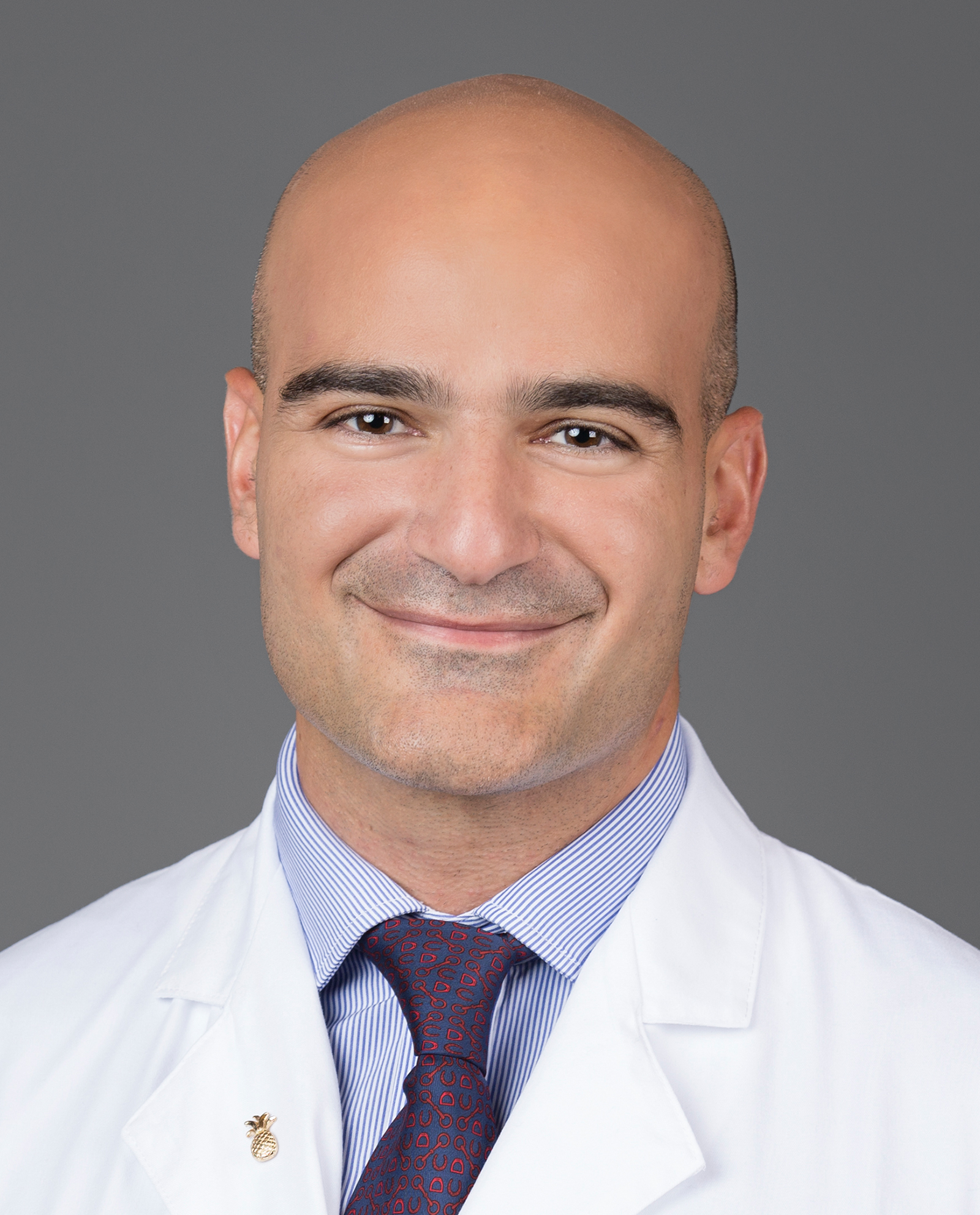
Socrates Kakoulides, M.D.
The underlying pathophysiology is fairly straightforward, he said. Carcinoid tumors release serotonin and other vasoactive substances into the bloodstream. These metabolites reach the right heart chamber, where they deposit plaque-like fibrous material on the tricuspid valve leaflets and subvalvular apparatus. Left-sided involvement is rare because the lungs efficiently metabolize these substances before they can reach the left heart.
“Medical management focuses on symptom relief with diuretics and somastostatin analogs such as octreotide or lanreotide to inhibit serotonin secretion,” Dr. Kakoulides said. “However, definitive therapy often requires tricuspid valve replacement, as repair is frequently not feasible given the fibrotic retracted nature of the leaflets. Bioprosthetic valves are generally preferred over mechanical valves.”
Case study
Dr. Kakoulides presented the case of a 61-year-old woman with a metastatic neuroendocrine tumor who underwent primary tumor resection, received lanreotide therapy and later Lutathera (Lu-177 dotatate), a radioactive somatostatin analog that targets NET cells. In April 2024, she underwent bioprosthetic tricuspid valve replacement at another health system.
Fifteen months later, in July 2025, she presented to the Institute with dyspnea. “What happened? The knee-jerk assumption is that there was a rapid deterioration of the valve, but the literature tells a different story,” Dr. Kakoulides said.
Bioprosthesis durability
In the journal Interactive CardioVascular Thoracic Surgery, a study published in 2012 showed that in 51 patients with carcinoid syndrome undergoing tricuspid valve replacement, all but one had a normal bioprosthesis at echocardiography or at post-mortem. Another study showed no patients required reoperation for bioprosthetic degeneration during a median 26-month follow-up.
“This evidence challenges our assumptions about valve durability in carcinoid patients,” Dr. Kakoulides noted. “When properly managed, bioprosthetic valves demonstrate remarkable durability.”
According to Dr. Kakoulides, the keys to successful outcomes in carcinoid heart disease include:
- Early recognition through biochemical testing (urinary 5-HIAA) and echocardiography
- Multidisciplinary management
- Optimal medical therapy with somatostatin analogs before and after surgery
- Appropriate timing of surgical intervention relative to tumor burden and systemic disease control
- Realistic expectations about bioprosthetic valve durability, which appears better than historically feared
Carcinoid heart disease represents a unique intersection of oncology and cardiology. Given the complexity of this condition and the technical challenges of tricuspid valve surgery, patients should seek care at high-volume, experienced centers with advanced imaging capabilities and specialized expertise in both structural heart disease and neuroendocrine tumors.
