
Next-Generation Vascular Surgery: Bridging Expertise and Innovation

Vascular surgery continues to evolve as new endovascular technologies, hybrid procedures and emerging applications of artificial intelligence expand how physicians can approach complex vascular disease.
For Young C. Lee, M.D., a board-certified vascular and endovascular surgeon at Baptist Health Miami Cardiac & Vascular Institute, the shift is not simply toward less-invasive treatment. It is toward more individualized treatment—using open, endovascular and hybrid techniques according to the patient’s anatomy, disease burden, comorbidities and long-term needs.
“Vascular disease is often complex, and there is rarely a one-size-fits-all approach,” Dr. Lee says. “Having expertise in open, endovascular and hybrid surgery allows us to tailor treatment to the individual patient.”
Expanding the Treatment Toolbox
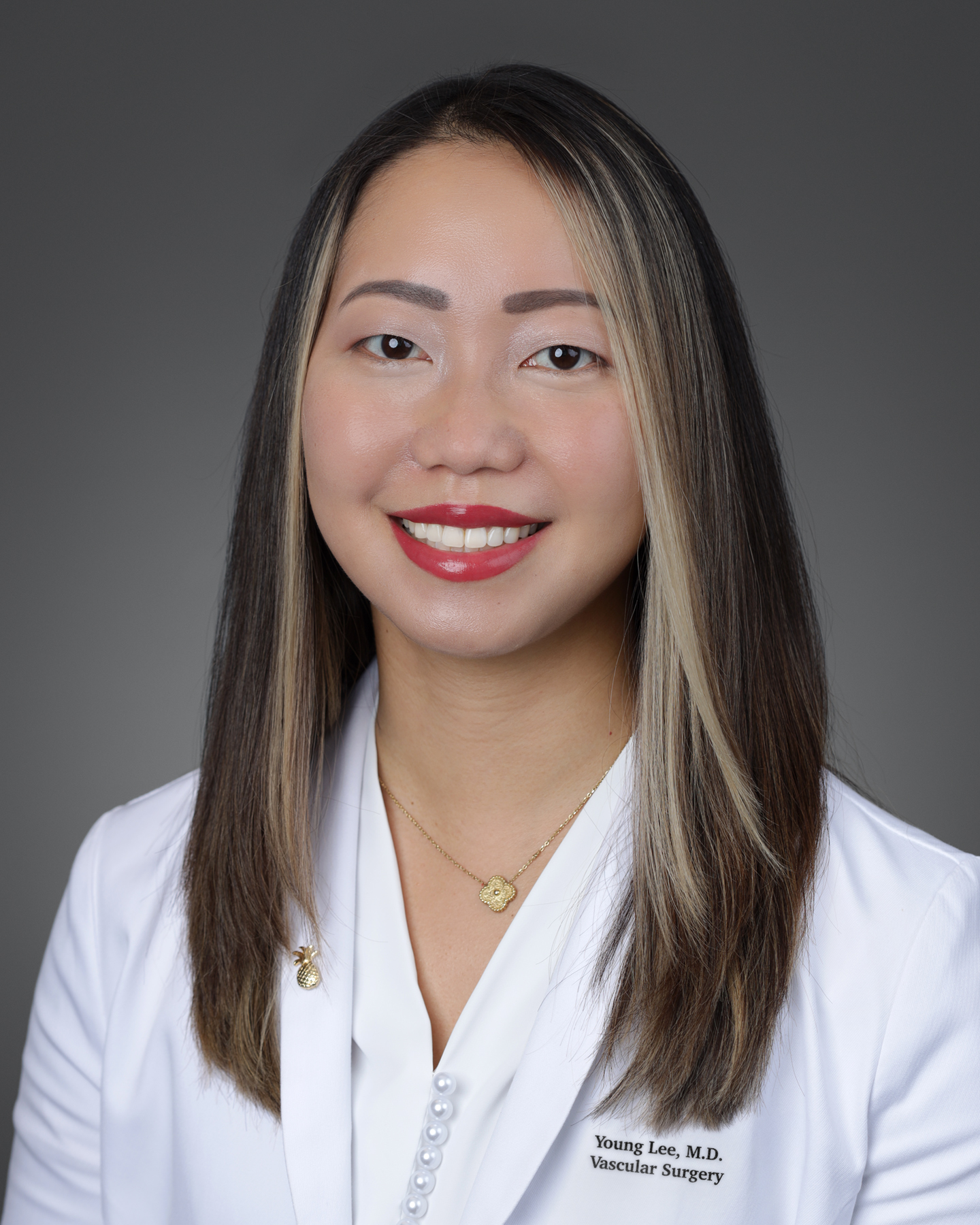
Young C. Lee, M.D
Vascular surgeons manage disease throughout the arterial and venous systems, including carotid disease, aortic aneurysms and dissections, mesenteric and renal artery disease, peripheral arterial disease, dialysis access, thoracic outlet syndrome and complex venous conditions.
Not every patient requires an intervention. Medical management and surveillance remain integral to vascular care, particularly because many patients require lifelong monitoring after placement of a stent or endograft or following vascular reconstruction.
That longitudinal perspective becomes increasingly important as procedural options expand.
In complex aortic disease, for example, open reconstruction remains necessary for some patients, while newer endovascular approaches can treat anatomies that were once less amenable to minimally invasive repair. Fenestrated endografts can be customized to accommodate renal arteries in selected patients with juxtarenal aneurysms, extending the potential reach of endovascular treatment.
“The goal is not to choose an endovascular procedure simply because it is less invasive, or an open operation simply because it is established,” Dr. Lee says. “The goal is to determine which approach offers the best solution for that particular patient.”
Where Hybrid Surgery Changes the Equation
Hybrid vascular surgery is one of the clearest examples of how the field is moving beyond an either-or approach.
Transcarotid artery revascularization (TCAR) combines surgical exposure of the common carotid artery with endovascular stenting and flow reversal for cerebral embolic protection.
Hybrid techniques can also help overcome challenging anatomy. In patients with common femoral artery disease, for instance, an open endarterectomy can be performed together with an endovascular revascularization during the same procedure rather than requiring separate staged interventions.
For patients with significant cardiac or pulmonary comorbidities, this flexibility may be particularly valuable when a lengthy open operation would carry substantial risk.
“Hybrid surgery gives us another way to approach complex disease,” Dr. Lee says. “We can use an open component where it is needed and combine it with minimally invasive techniques to create a treatment strategy that may be better suited to the patient.”
Rethinking the “No-Option” Limb
The evolution of limb-salvage techniques is another area where the treatment paradigm is changing, she adds.
Patients with advanced peripheral arterial disease and poor distal outflow historically may have had few options beyond major amputation. Newer approaches such as percutaneous deep vein arterialization can provide an alternative route for blood flow to the foot in carefully selected patients when conventional revascularization is not feasible.
Dr. Lee emphasizes that these procedures remain salvage strategies and are not appropriate for every patient. But their availability has expanded the conversation around what may still be possible.
“As limb salvage has advanced, we have become better at saying yes instead of no,” she says. “For some patients who once had no meaningful revascularization option, newer techniques may give us another opportunity to preserve the limb and maintain mobility.”
The same philosophy can apply in other high-risk vascular scenarios. In acute mesenteric ischemia, for example, combining open surgical exposure with endovascular revascularization may allow physicians to avoid a more extensive bypass in selected patients.
AI and More Personalized Vascular Decision-Making
Artificial intelligence may further refine how vascular disease is evaluated and treated.
Dr. Lee sees imaging as one of the most promising areas. Rather than simply identifying an aneurysm, dissection or stenosis, AI-supported imaging may eventually help characterize disease more precisely, including anatomy, plaque features and other variables that could inform treatment selection.
Potential applications also include risk prediction, complication forecasting, clinical monitoring and documentation.
“A lot of vascular patients are extremely complex. They do not just have one medical problem,” Dr. Lee says. “The more information we can bring together with help from AI, the better we may be able to develop a personalized and tailored approach to treatment.”
That does not diminish the importance of clinical judgment. Instead, Dr. Lee views emerging technology as another tool that can support physicians in making increasingly nuanced decisions.
“Technology continues to give us new options, but expertise remains essential in determining how and when to use them,” she says. “The future of vascular surgery is about bringing open surgical expertise, endovascular innovation, imaging and new technologies together to provide more individualized care.”
For physicians managing patients with complex vascular disease, early specialty evaluation may help identify treatment strategies that are not immediately apparent—particularly in cases involving advanced peripheral arterial disease, challenging aortic anatomy or patients considered high risk for conventional surgery.
Learn more about Baptist Health Heart & Vascular Care’s Center for Vascular Disease.
